Beatriz's Sound Waves Report - Investigating Beatboxing
Sound Waves Investigation
Phenomenon: An investigation into the behavior of mechanical longitudinal sound waves.
Watch/Read before the lab:
Background: So what type of wave is sound? Sound waves fall into three categories: longitudinal waves, mechanical waves, and pressure waves. Keep reading to find out what qualifies them as such.
Longitudinal Sound Waves - A longitudinal wave is a wave in which the motion of the medium’s particles is parallel to the direction of the energy transport. If you push a slinky back and forth, the coils move in a parallel fashion (back and forth). Similarly, when a tuning fork is struck, the direction of the sound wave is parallel to the motion of the air particles.
Mechanical Sound Waves - A sound wave moves through air by displacing air particles in a chain reaction. As one particle is displaced from its equilibrium position, it pushes or pulls on neighboring molecules, causing them to be displaced from their equilibrium. As particles continue to displace one another with mechanical vibrations, the disturbance is transported throughout the medium. These particle-to-particle, mechanical vibrations of sound conductance qualify sound waves as mechanical waves. Sound energy, or energy associated with the vibrations created by a vibrating source, requires a medium to travel, which makes sound energy a mechanical wave.
Pressure Sound Waves - Because sound waves consist of compressions and rarefactions, their regions fluctuate between low and high-pressure patterns. For this reason, sound waves are considered to be pressure waves. For example, as the human ear receives sound waves from the surrounding environment, it detects rarefactions as low-pressure periods and compressions as high-pressure periods.
Purpose: Using your knowledge of science and the materials gathered, you are to design and conduct an experiment in which you measure the impact of your (IV) independent variable on a (DV) dependent variable of your choice.

Materials (possible):
Beatboxing - our new skill set
Audacity
Whistling
Product testing - noise blockers
Instruments
Garageband
Sound transmission
Singing
Body music
etc…
Rules:
To keep a clean, tidy work space. Don’t forget to use the ‘dead zone’ when not using equipment.
To be focused on the task at hand and keep your voice at an acceptable volume.
To be courteous to other pupils in the classroom.
Safety Concerns:
Always keep goggles on when conducting an experiment with identified hazards.
Do not leave your work space without permission from the teacher.
Alert the teacher to any broken glass - do not pick up the glass yourself!
____________________________________________________________________________________
Lab-Work and Data Collection
Problem / Question:
How do vocal scratching sounds (AUW & WUA) affect the pitch?
Hypotheses and Prediction:
Positive: If the vocal scratching sound is changed, then the pitch will increase.
Negative: If the vocal scratching sound is changed, then the pitch will decrease.
Null: If the vocal scratching sound is changed, then the pitch will stay the same.
Prediction:
If the vocal scratching sound is changed, then the pitch will increase because the energy which is provided when the scratching sound is made, is increasing as the person makes more sounds. This means that if there is more energy the pitch will increase.
Identify the Variables:
Independent Variable (IV): Vocal scratching sounds (AUW & WUA)
Dependent Variable (DV): Pitch
Control Variables (CVs):
Recording
The sounds made
Volume: 70%
Youtube video
Tools: Effects - Change Pitch
Location where we will put the sound into Audacity
Design and Procedure: (This needs to be listed step-by-step and include a diagram of your apparatus)
Procedure
Open youtube or another type of video with the sounds necessary.
https://youtu.be/8DM3H7mOgTk Video
Find a recording of the vocal scratching sounds
Open https://tomp3.cc/en to turn the audio into an MP3
Put the link to the audio in the website
Convert the audio into an MP3
Open https://mp3cut.net/ to cut the audio
Find the parts of the recording with the sounds
Cut the audio (Here is the already cut audio:file:///C:/Users/Beatriz/Downloads/tomp3%20(mp3cut.net).mp3)
Open Audacity
Move the audio into Audacity
Highlight a specific part of the sound (AUW)
Click on the effects option
On effects chose the change pitch option
Check the starting pitch
Collect data
Highlight the other specific part of the sound (AUW)
Check the pitch
Collect data
Study the data
See which of the sounds changed the pitch the most
See if the hypothesis is correct or incorrect
Research why that sound is the one that changed the most
Write down what was researched
Explain why the hypothesis is correct or incorrect
Create the introduction to the report
Move the data and research into the text
Materials
Audacity
Website 1: YouTube to MP3
Website 2: Audio Cutter
Vocal Scratch like a Pro -Tom Thum (beatbox tutorial) Minute 1:09 to 1:15
Data table
Preliminary Trials
I thought that I needed to get another computer in order to record the audio in audacity.
After going to the tech department I found out that the option above would probably take out all of the quality of the sound.
The IT gave me two websites to be able to turn the audio into an MP3 and to cut it.
After using the websites and saving the recording as an audio file I tried to move the audio into Audacity.
I was unsuccessful, so I just started recording on Audacity while playing the audio.
This worked but the quality wasn't as good.
Even though the quality wasn't the best I still used the audio, and one observation I had was that the sound waves were formed in a “normal” way.
I highlighted the first scratching sound and checked what was the pitch
The first pitch was 1633.3333 Hz
I highlighted the second sound and checked
The second pitch was 816.667 Hz
I highlighted the third sound and checked
The pitch was 1520.690 Hz
The pitch for the fourth sound was 22050.000 Hz
My trials have shown that my hypothesis is not correct, because the same sound was made, but in different tones, and instead of only increasing the second sound had a lower pitch than the first, but from there the pitch only increased, proving that the hypothesis was actually correct.
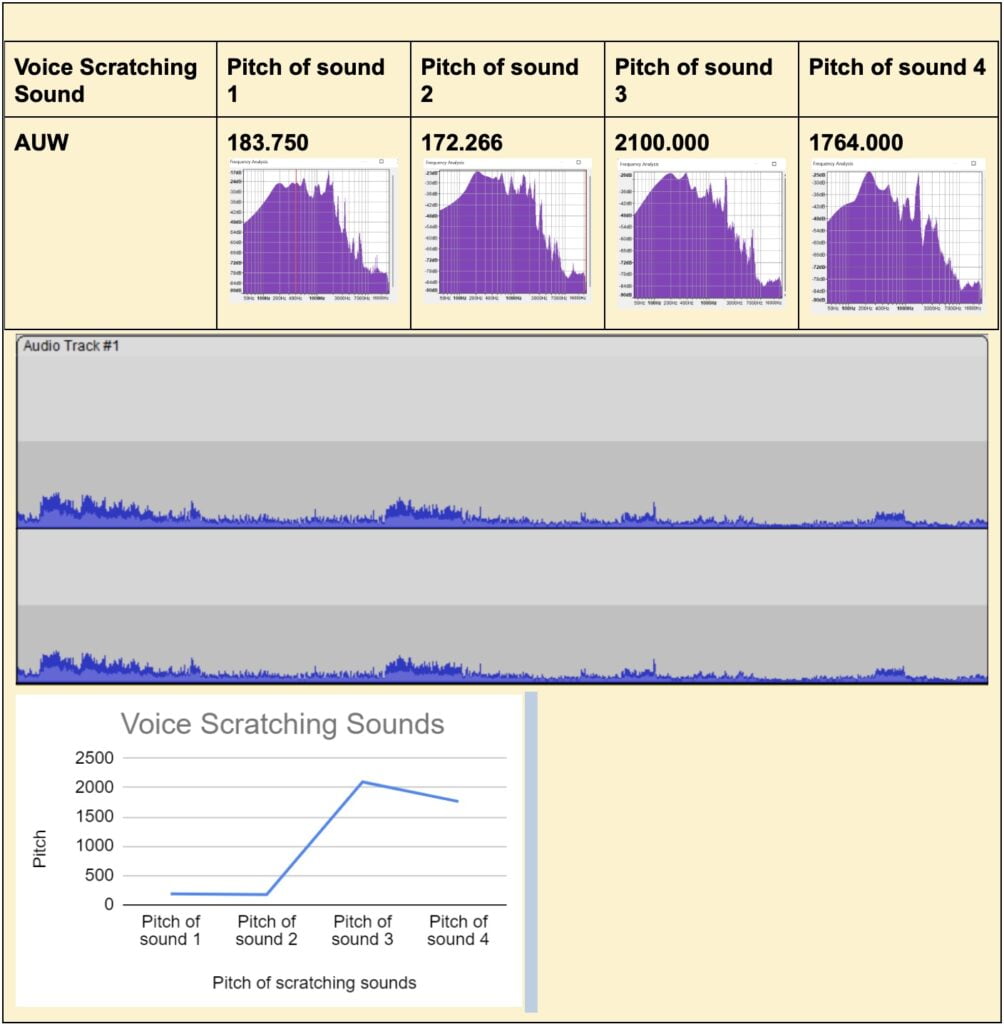
Data Collection: (Create a table to clearly show ALL data collected)
Data Analysis: (Think deeply about what the data collected means scientifically)
Discussion (2 paragraphs):
Write your conclusion statement.
Support your conclusion by using the experimental data as evidence.
Suggest a scientific reason to explain your results. Support your explanation with research and pictures.
Write about what errors/mistakes could have happened in the experiment. Think about control variables that have not been controlled, human error, equipment errors, problems with your original method, etc…
Tell how these errors or mistakes may have affected your experimental results. Did they cause your DV measurement to increase or decrease?
If you did this experiment again, how would you make it better? Suggest specific method/procedural changes to remove the errors in the future. Also, how could you improve the precision and reliability of the data?
In our “How do vocal scratching sounds (AUW & WUA) affect the pitch?” experiment we saw that if we change the scratching sound made, the pitch will increase. If we look at the data table we will see that the pitch of the first sound was 183.750hz, then, if we look at the 4th sound, which is the last one, the pitch is 1764.000hz, proving that the pitch increased as we changed the sound made. If we listen to the sounds made, you can hear how the energy changes. The first sound seems to have a lot of energy, but the pitch is actually the second lowest one. The second sound doesn't have much energy, and the pitch goes with it, being the lowest one in the experiment. The third one doesn't seem to have so much energy, but still more than the first and second sound, and the pitch is 2100.000, being the highest of the experiment. In the fourth and last sound, the energy lowers a bit. The result is the pitch also lowering to 1764.000. In the video we watched to get the scratching sounds, the narrator explains that you need to make the sounds from the back of your throat, this needs to happen so the break in your voice is less noticeable. This shows that these sounds will do something inside your mouth that makes the vocal cords move in a way that will make the cracks. This can happen if the scratching sound is in a note that you cannot reach. I personally believe that it happens because the sound AUW has different notes that change really fast, and we are not used to having those drastic changes happen when we are talking. After doing some more research I found out that the W sound, which is basically the base for the scratching sounds, is a glide sound. A glide sound is “made when the articulators move”, also, the W sound is made with the lips rounded, so the sound will come out in the way we need it in order to make the correct sound, this also applies for when we are talking.
One thing I observed during the experiment was that my hypothesis was only partially correct. As I mentioned if we look at the data table, we see that the pitch of the first sound was 183.750hz, then, if we look at the 4th sound, which is the last one, the pitch is 1764.000hz, showing that it did increase, witch is what my hypothesis says. But, if we look at the rest of the data table the pitch also decreased. From the first to the second the pitch decreased, and from the second to the third it increased significantly, going from 172.266hz to 2100.000hz. Again, from the third to the fourth it decreases. If we look at the picture from the sound waves we can see that the waves show the complete opposite of what we saw from the collected data. The first and the second sound waves are the bigger ones, and the third sound wave is the smallest one, even though it is actually the one with the higher pitch. I presume that this may have been a problem in my experiment because it showed that neither of the hypotheses, positive, negative and null, was completely correct. One mistake that I made was that I accidentally lost the recording on Audacity that I was using. This resulted in me having to re-do all my research on the data table, since the recording was one of my controlled variables. If I was to do my experiment again I would go directly into youtube to find the voice scratching sounds. I spent around half a class watching the beatbox workshop video just to realize that Danny Lauda didn’t put the sounds in the video. This didn’t affect me so much because I was a little advanced on the experiment, but it still cost me some time that I could have used to perform the experiment. Not only that, but if I was able to re-do my experiment, I would try to, first, either find a better software to use instead of Audacity or learn how to use it well, this is because I had a couple of problems with it and had to re-record the audio multiple times in order to get it right. My problem of having the pitches go down and up doesn't really have a solution, so I believe that whoever is doing the experiment needs to learn how to deal with it or maybe create the sound in a way that the energy keeps going up, causing the pitch to only go up, instead of up and down.
Resources:
Morrant, Beth. “What Are the Different Types of Speech Sounds?” The Speech and Language Garden, The Speech and Language Garden, 31 Aug. 2021, https://www.thespeechandlanguagegarden.com/post/what-are-the-different-types-of-speech-sounds.
Thum, Tom. YouTube, Tom Thum, 24 Feb. 2018, https://youtu.be/8DM3H7mOgTk. Accessed 18 Oct. 2022.
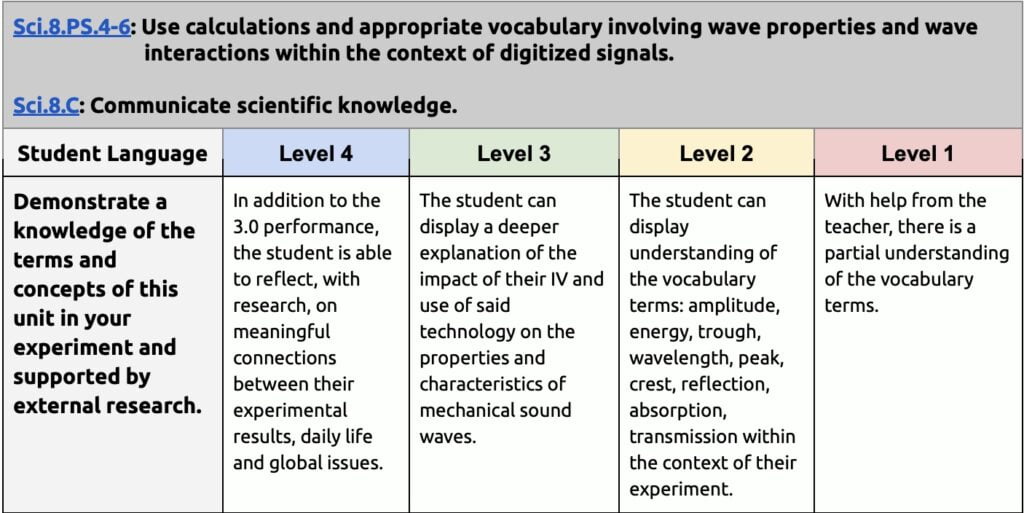
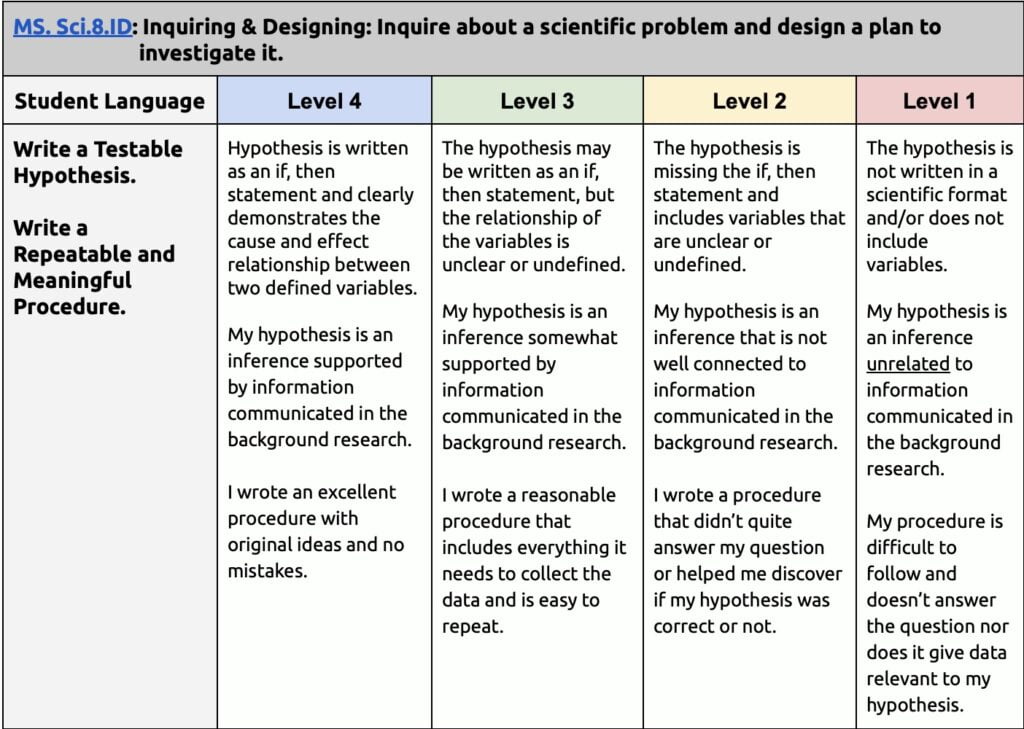
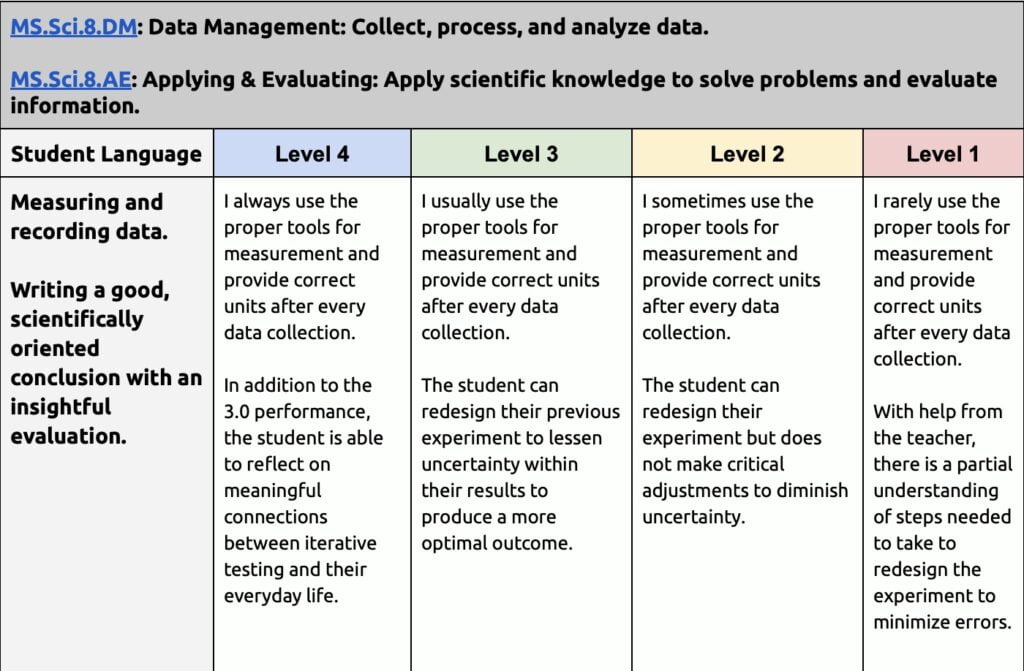
Assessment: You will be assessed on the following 5 learning standards.